

QUICK LINK
Stainless Steel Sheet Metal Gauge Chart: Thickness in MM & Inches
What Is Stainless Steel Sheet Metal Gauge?
Stainless steel sheet metal gauge is a numerical measurement system used to indicate the thickness of stainless steel sheets and coils. It is commonly used in metal fabrication, construction, industrial equipment manufacturing, and other applications involving stainless steel materials.
One important rule to remember is that a higher gauge number indicates a thinner sheet, while a lower gauge number indicates a thicker sheet. For example, 10 gauge stainless steel is significantly thicker than 20 gauge stainless steel.
Although gauge numbers are widely used in the metal industry, they are not a direct unit of measurement like millimeters or inches. Therefore, it is important to convert gauge numbers into actual thickness measurements when selecting materials or placing orders.
A stainless steel gauge chart helps buyers, engineers, and fabricators quickly identify the corresponding sheet thickness in inches and millimeters.
Stainless Steel Sheet Metal Gauge Chart
The following stainless steel gauge chart provides common reference thicknesses in inches and millimeters. It helps buyers compare different sheet thicknesses and identify suitable material specifications for their projects.
| Gauge | Thickness (Inches) | Thickness (mm) |
|---|---|---|
| 7 | 0.1875 | 4.76 |
| 8 | 0.1719 | 4.37 |
| 9 | 0.1562 | 3.97 |
| 10 | 0.1406 | 3.57 |
| 11 | 0.1250 | 3.18 |
| 12 | 0.1094 | 2.78 |
| 13 | 0.0937 | 2.38 |
| 14 | 0.0781 | 1.98 |
| 15 | 0.0703 | 1.79 |
| 16 | 0.0625 | 1.59 |
| 17 | 0.0562 | 1.43 |
| 18 | 0.0500 | 1.27 |
| 19 | 0.0437 | 1.11 |
| 20 | 0.0375 | 0.95 |
| 21 | 0.0344 | 0.87 |
| 22 | 0.0312 | 0.79 |
| 23 | 0.0281 | 0.71 |
| 24 | 0.0250 | 0.64 |
| 25 | 0.0219 | 0.56 |
| 26 | 0.0187 | 0.48 |
| 27 | 0.0172 | 0.44 |
| 28 | 0.0156 | 0.40 |
| 29 | 0.0141 | 0.36 |
| 30 | 0.0125 | 0.32 |
Note: These are commonly used nominal reference values for stainless steel sheet thickness. Actual thickness and tolerances may vary according to applicable standards, manufacturing specifications, and suppliers. Always confirm the required dimensions before ordering.
How to Read a Stainless Steel Gauge Chart?
Reading a stainless steel gauge chart is straightforward once you understand how the gauge system works. Follow these steps to identify the correct sheet thickness.
Step 1: Identify the Gauge Number
Find the required gauge number based on your product specifications or engineering drawings. Common stainless steel sheet gauges include 14, 16, 18, 20, and 22.
Step 2: Check the Corresponding Thickness
Locate the gauge number in the chart and read its corresponding thickness in inches or millimeters.
For example:
-
14 Gauge Stainless Steel = 0.0781 inches (1.98 mm)
-
16 Gauge Stainless Steel = 0.0625 inches (1.59 mm)
-
18 Gauge Stainless Steel = 0.0500 inches (1.27 mm)
-
20 Gauge Stainless Steel = 0.0375 inches (0.95 mm)
Step 3: Confirm the Material Grade
Determine whether you need 201, 304, 316, 430, or another stainless steel grade. Different grades offer different corrosion resistance, mechanical properties, and application suitability.
Step 4: Verify the Actual Thickness and Tolerance
Gauge values are nominal references. Before ordering stainless steel sheets or coils, confirm the specified thickness, applicable tolerance, and material standard with your supplier.
Stainless Steel Gauge vs. Thickness: What Is the Difference?
Gauge and thickness are two ways of describing stainless steel sheet dimensions, but they are not interchangeable measurement units.
Gauge refers to a numerical classification, while thickness represents the actual physical dimension of the material, usually measured in inches or millimeters.
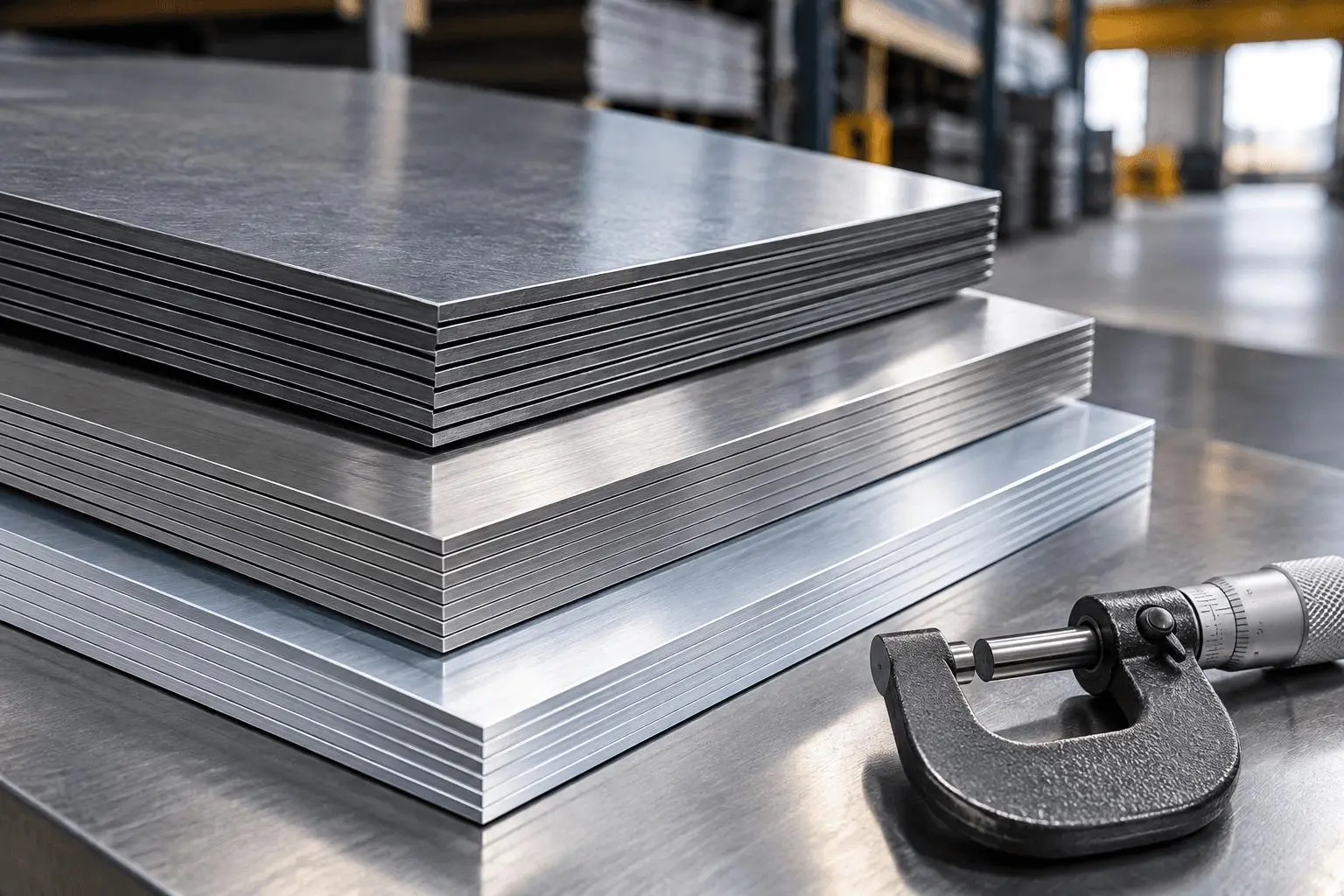
For example, 16 gauge stainless steel has a nominal thickness of approximately 1.59 mm (0.0625 inches). When purchasing materials for precision fabrication, specifying the actual thickness is more reliable than providing only a gauge number.
Here are the key differences:
-
Gauge: A numerical reference used in the metal industry.
-
Thickness: The actual dimensional measurement in millimeters or inches.
-
Conversion: Gauge numbers must be converted according to the applicable material-specific chart.
-
Purchasing: Always confirm the exact thickness and tolerance before placing an order.
Stainless Steel Gauge vs. Other Metal Gauge Charts
Different metals may use different gauge systems. Therefore, the same gauge number does not necessarily represent the same thickness across stainless steel, carbon steel, galvanized steel, and aluminum.
For example, 16 gauge stainless steel is approximately 1.59 mm thick, while 16 gauge carbon steel is approximately 1.52 mm thick under commonly used reference systems. Aluminum also uses a different gauge reference system, commonly associated with the Brown & Sharpe system.
When comparing sheet metal materials, buyers should always check the corresponding material-specific gauge chart rather than assuming that the same gauge number represents an identical thickness.
For accurate material selection, specify the metal type, grade, actual thickness, and applicable dimensional tolerance.
Common Applications of Different Stainless Steel Sheet Thicknesses
Stainless steel sheet thickness plays an important role in determining the strength, weight, formability, and performance of finished products. Different thicknesses are selected according to the structural requirements and working conditions of each application.
| Thickness Range | Typical Applications |
|---|---|
| 0.3–0.6 mm | Decorative panels, lightweight covers, interior trim |
| 0.6–1.0 mm | Kitchen equipment, appliance panels, light enclosures |
| 1.0–1.5 mm | Commercial kitchen equipment, cabinets, metal housings |
| 1.5–2.0 mm | Industrial enclosures, equipment frames, structural components |
| 2.0–3.0 mm | Machinery components, industrial tanks, fabrication parts |
| Above 3.0 mm | Heavy-duty equipment, industrial structures, load-bearing components |
These thickness ranges are general application references rather than fixed industry requirements. The appropriate thickness depends on product design, load conditions, material grade, fabrication method, and applicable standards.
Choosing the correct stainless steel sheet thickness helps balance material strength, weight, manufacturing costs, and long-term performance.
Factors to Consider When Choosing Stainless Steel Sheet Thickness
Selecting the right stainless steel sheet thickness requires more than simply checking a gauge chart. Buyers and manufacturers should consider several factors before confirming material specifications.
1. Mechanical Strength and Load Requirements
Thicker stainless steel sheets generally provide greater rigidity and resistance to deformation. Applications involving heavy loads, impact, or structural support may require thicker materials.
2. Application Environment
The operating environment affects material selection. For applications exposed to moisture, chemicals, or outdoor conditions, the stainless steel grade should be selected based on corrosion resistance requirements.
3. Forming and Fabrication Requirements
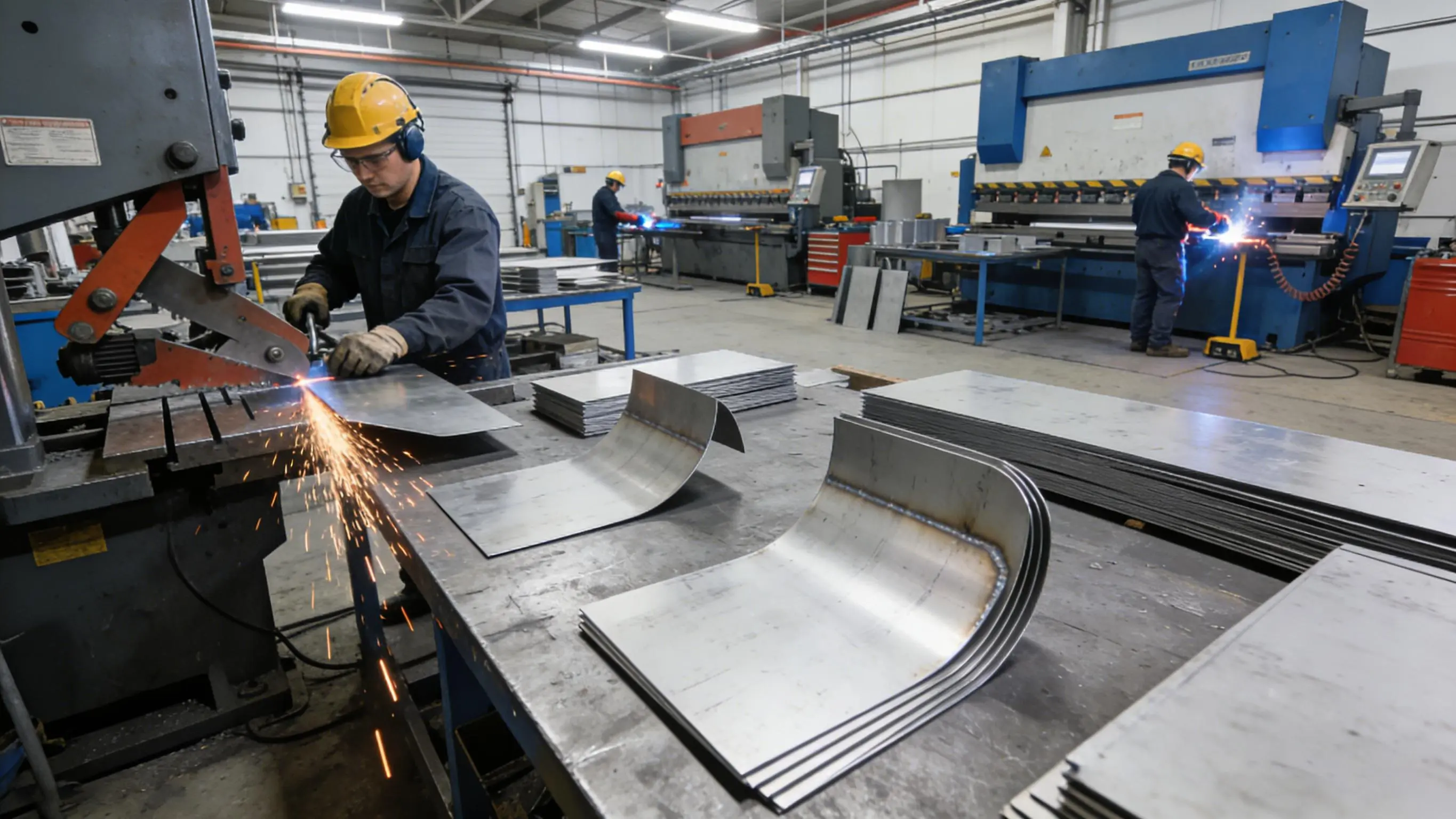
Sheet thickness influences cutting, bending, welding, stamping, and other fabrication processes. Thinner sheets are generally easier to form, while thicker sheets may require specialized equipment and processing parameters.
4. Weight and Material Costs
Thicker sheets generally increase material consumption, product weight, and transportation costs. Buyers should balance mechanical requirements with overall project budgets.
5. Material Grade and Specifications
Common stainless steel grades include 201, 304, 316, and 430. Each grade offers different properties and application advantages. Buyers should confirm both the grade and actual thickness when requesting quotations.
By evaluating these factors together, manufacturers and buyers can select stainless steel sheets that meet their technical and commercial requirements.
Frequently Asked Questions About Stainless Steel Sheet Gauge
What Is the Thickness of 16 Gauge Stainless Steel?
16 gauge stainless steel has a nominal thickness of approximately 0.0625 inches (1.59 mm). It is commonly used in equipment panels, kitchen components, metal enclosures, and fabrication projects.
Is 18 Gauge Stainless Steel Thicker Than 20 Gauge?
Yes. 18 gauge stainless steel is thicker than 20 gauge stainless steel. Their nominal thicknesses are approximately 1.27 mm and 0.95 mm, respectively. A lower gauge number indicates a thicker sheet.
What Is the Difference Between 304 and 316 Stainless Steel Gauge Thickness?
304 and 316 stainless steel generally follow the same nominal gauge-to-thickness reference. For example, 16 gauge 304 and 16 gauge 316 stainless steel are both approximately 1.59 mm thick. Their main differences relate to chemical composition and corrosion resistance rather than nominal gauge thickness.
What Is the Most Common Stainless Steel Sheet Thickness?
Commonly used stainless steel sheet thicknesses include 0.8 mm, 1.0 mm, 1.2 mm, 1.5 mm, and 2.0 mm. The appropriate thickness depends on the application, structural requirements, and fabrication process.
Does a Higher Gauge Number Mean Thicker or Thinner Stainless Steel?
A higher gauge number means a thinner stainless steel sheet. For example, 24 gauge stainless steel is thinner than 16 gauge stainless steel.
Should I Specify Gauge or Millimeters When Ordering Stainless Steel Sheets?
It is recommended to specify the actual thickness in millimeters or inches, together with the stainless steel grade and required tolerance. Gauge numbers can be used as additional references, but should not replace precise dimensional specifications.
Contact Winton Steel for Stainless Steel Sheet Requirements
Choosing the right stainless steel sheet involves more than selecting a gauge number. Material grade, actual thickness, dimensional tolerance, surface finish, and intended application all affect the final material specification.
If you are sourcing stainless steel sheets or coils for industrial manufacturing, construction, or metal fabrication, contact Winton Steel to discuss your requirements.
Provide your preferred stainless steel grade, thickness, dimensions, surface finish, and order quantity to help our team recommend suitable material options and prepare a quotation for your project.
What Is Stainless Steel Sheet Metal Gauge?
Stainless steel sheet metal gauge is a numerical measurement system used to indicate the thickness of stainless steel sheets and coils. It is commonly used in metal fabrication, construction, industrial equipment manufacturing, and other applications involving stainless steel materials.
One important rule to remember is that a higher gauge number indicates a thinner sheet, while a lower gauge number indicates a thicker sheet. For example, 10 gauge stainless steel is significantly thicker than 20 gauge stainless steel.
Although gauge numbers are widely used in the metal industry, they are not a direct unit of measurement like millimeters or inches. Therefore, it is important to convert gauge numbers into actual thickness measurements when selecting materials or placing orders.
A stainless steel gauge chart helps buyers, engineers, and fabricators quickly identify the corresponding sheet thickness in inches and millimeters.
Stainless Steel Sheet Metal Gauge Chart
The following stainless steel gauge chart provides common reference thicknesses in inches and millimeters. It helps buyers compare different sheet thicknesses and identify suitable material specifications for their projects.
| Gauge | Thickness (Inches) | Thickness (mm) |
|---|---|---|
| 7 | 0.1875 | 4.76 |
| 8 | 0.1719 | 4.37 |
| 9 | 0.1562 | 3.97 |
| 10 | 0.1406 | 3.57 |
| 11 | 0.1250 | 3.18 |
| 12 | 0.1094 | 2.78 |
| 13 | 0.0937 | 2.38 |
| 14 | 0.0781 | 1.98 |
| 15 | 0.0703 | 1.79 |
| 16 | 0.0625 | 1.59 |
| 17 | 0.0562 | 1.43 |
| 18 | 0.0500 | 1.27 |
| 19 | 0.0437 | 1.11 |
| 20 | 0.0375 | 0.95 |
| 21 | 0.0344 | 0.87 |
| 22 | 0.0312 | 0.79 |
| 23 | 0.0281 | 0.71 |
| 24 | 0.0250 | 0.64 |
| 25 | 0.0219 | 0.56 |
| 26 | 0.0187 | 0.48 |
| 27 | 0.0172 | 0.44 |
| 28 | 0.0156 | 0.40 |
| 29 | 0.0141 | 0.36 |
| 30 | 0.0125 | 0.32 |
Note: These are commonly used nominal reference values for stainless steel sheet thickness. Actual thickness and tolerances may vary according to applicable standards, manufacturing specifications, and suppliers. Always confirm the required dimensions before ordering.
How to Read a Stainless Steel Gauge Chart?
Reading a stainless steel gauge chart is straightforward once you understand how the gauge system works. Follow these steps to identify the correct sheet thickness.
Step 1: Identify the Gauge Number
Find the required gauge number based on your product specifications or engineering drawings. Common stainless steel sheet gauges include 14, 16, 18, 20, and 22.
Step 2: Check the Corresponding Thickness
Locate the gauge number in the chart and read its corresponding thickness in inches or millimeters.
For example:
-
14 Gauge Stainless Steel = 0.0781 inches (1.98 mm)
-
16 Gauge Stainless Steel = 0.0625 inches (1.59 mm)
-
18 Gauge Stainless Steel = 0.0500 inches (1.27 mm)
-
20 Gauge Stainless Steel = 0.0375 inches (0.95 mm)
Step 3: Confirm the Material Grade
Determine whether you need 201, 304, 316, 430, or another stainless steel grade. Different grades offer different corrosion resistance, mechanical properties, and application suitability.
Step 4: Verify the Actual Thickness and Tolerance
Gauge values are nominal references. Before ordering stainless steel sheets or coils, confirm the specified thickness, applicable tolerance, and material standard with your supplier.
Stainless Steel Gauge vs. Thickness: What Is the Difference?
Gauge and thickness are two ways of describing stainless steel sheet dimensions, but they are not interchangeable measurement units.
Gauge refers to a numerical classification, while thickness represents the actual physical dimension of the material, usually measured in inches or millimeters.
For example, 16 gauge stainless steel has a nominal thickness of approximately 1.59 mm (0.0625 inches). When purchasing materials for precision fabrication, specifying the actual thickness is more reliable than providing only a gauge number.
Here are the key differences:
-
Gauge: A numerical reference used in the metal industry.
-
Thickness: The actual dimensional measurement in millimeters or inches.
-
Conversion: Gauge numbers must be converted according to the applicable material-specific chart.
-
Purchasing: Always confirm the exact thickness and tolerance before placing an order.
Stainless Steel Gauge vs. Other Metal Gauge Charts
Different metals may use different gauge systems. Therefore, the same gauge number does not necessarily represent the same thickness across stainless steel, carbon steel, galvanized steel, and aluminum.
For example, 16 gauge stainless steel is approximately 1.59 mm thick, while 16 gauge carbon steel is approximately 1.52 mm thick under commonly used reference systems. Aluminum also uses a different gauge reference system, commonly associated with the Brown & Sharpe system.
When comparing sheet metal materials, buyers should always check the corresponding material-specific gauge chart rather than assuming that the same gauge number represents an identical thickness.
For accurate material selection, specify the metal type, grade, actual thickness, and applicable dimensional tolerance.
Common Applications of Different Stainless Steel Sheet Thicknesses
Stainless steel sheet thickness plays an important role in determining the strength, weight, formability, and performance of finished products. Different thicknesses are selected according to the structural requirements and working conditions of each application.
| Thickness Range | Typical Applications |
|---|---|
| 0.3–0.6 mm | Decorative panels, lightweight covers, interior trim |
| 0.6–1.0 mm | Kitchen equipment, appliance panels, light enclosures |
| 1.0–1.5 mm | Commercial kitchen equipment, cabinets, metal housings |
| 1.5–2.0 mm | Industrial enclosures, equipment frames, structural components |
| 2.0–3.0 mm | Machinery components, industrial tanks, fabrication parts |
| Above 3.0 mm | Heavy-duty equipment, industrial structures, load-bearing components |
These thickness ranges are general application references rather than fixed industry requirements. The appropriate thickness depends on product design, load conditions, material grade, fabrication method, and applicable standards.
Choosing the correct stainless steel sheet thickness helps balance material strength, weight, manufacturing costs, and long-term performance.
Factors to Consider When Choosing Stainless Steel Sheet Thickness
Selecting the right stainless steel sheet thickness requires more than simply checking a gauge chart. Buyers and manufacturers should consider several factors before confirming material specifications.
1. Mechanical Strength and Load Requirements
Thicker stainless steel sheets generally provide greater rigidity and resistance to deformation. Applications involving heavy loads, impact, or structural support may require thicker materials.
2. Application Environment
The operating environment affects material selection. For applications exposed to moisture, chemicals, or outdoor conditions, the stainless steel grade should be selected based on corrosion resistance requirements.
3. Forming and Fabrication Requirements
Sheet thickness influences cutting, bending, welding, stamping, and other fabrication processes. Thinner sheets are generally easier to form, while thicker sheets may require specialized equipment and processing parameters.
4. Weight and Material Costs
Thicker sheets generally increase material consumption, product weight, and transportation costs. Buyers should balance mechanical requirements with overall project budgets.
5. Material Grade and Specifications
Common stainless steel grades include 201, 304, 316, and 430. Each grade offers different properties and application advantages. Buyers should confirm both the grade and actual thickness when requesting quotations.
By evaluating these factors together, manufacturers and buyers can select stainless steel sheets that meet their technical and commercial requirements.
Frequently Asked Questions About Stainless Steel Sheet Gauge
What Is the Thickness of 16 Gauge Stainless Steel?
16 gauge stainless steel has a nominal thickness of approximately 0.0625 inches (1.59 mm). It is commonly used in equipment panels, kitchen components, metal enclosures, and fabrication projects.
Is 18 Gauge Stainless Steel Thicker Than 20 Gauge?
Yes. 18 gauge stainless steel is thicker than 20 gauge stainless steel. Their nominal thicknesses are approximately 1.27 mm and 0.95 mm, respectively. A lower gauge number indicates a thicker sheet.
What Is the Difference Between 304 and 316 Stainless Steel Gauge Thickness?
304 and 316 stainless steel generally follow the same nominal gauge-to-thickness reference. For example, 16 gauge 304 and 16 gauge 316 stainless steel are both approximately 1.59 mm thick. Their main differences relate to chemical composition and corrosion resistance rather than nominal gauge thickness.
What Is the Most Common Stainless Steel Sheet Thickness?
Commonly used stainless steel sheet thicknesses include 0.8 mm, 1.0 mm, 1.2 mm, 1.5 mm, and 2.0 mm. The appropriate thickness depends on the application, structural requirements, and fabrication process.
Does a Higher Gauge Number Mean Thicker or Thinner Stainless Steel?
A higher gauge number means a thinner stainless steel sheet. For example, 24 gauge stainless steel is thinner than 16 gauge stainless steel.
Should I Specify Gauge or Millimeters When Ordering Stainless Steel Sheets?
It is recommended to specify the actual thickness in millimeters or inches, together with the stainless steel grade and required tolerance. Gauge numbers can be used as additional references, but should not replace precise dimensional specifications.
Contact Winton Steel for Stainless Steel Sheet Requirements
Choosing the right stainless steel sheet involves more than selecting a gauge number. Material grade, actual thickness, dimensional tolerance, surface finish, and intended application all affect the final material specification.
If you are sourcing stainless steel sheets or coils for industrial manufacturing, construction, or metal fabrication, contact Winton Steel to discuss your requirements.
Provide your preferred stainless steel grade, thickness, dimensions, surface finish, and order quantity to help our team recommend suitable material options and prepare a quotation for your project.